
How To Choose Bedroom Colours For Your Autistic Child
Autism is very complex and so are the needs of people with autism. In particular, some autistic children struggle with sleep and need extra support to unwind before bed. The busy school environment of bright lights, strong colours, loud noises, scents, movement and various textures can be overwhelming. Such sensory hypersensitivity causes eye strain, headaches and fatigue. Even the commute to school is enough to aggravate the nervous system. Then when the day finally comes to a close, the struggle remains since it’s difficult to relax enough to fall asleep. On the other hand, other children may be hyposensitive and seek extra sensory input to feel satisfied.
Sleep is important for development and emotional regulation. A lack thereof only amplifies existing traits such as hyperactivity or anxiety or poor concentration. But while autism affects the body’s sleep-wake cycle to some degree, a thoughtfully considered space of the right colours, lighting and textures can meet the sensory needs of your child and promote restfulness. There are measures you can take at home with colour design to support your little one to better quality sleep.
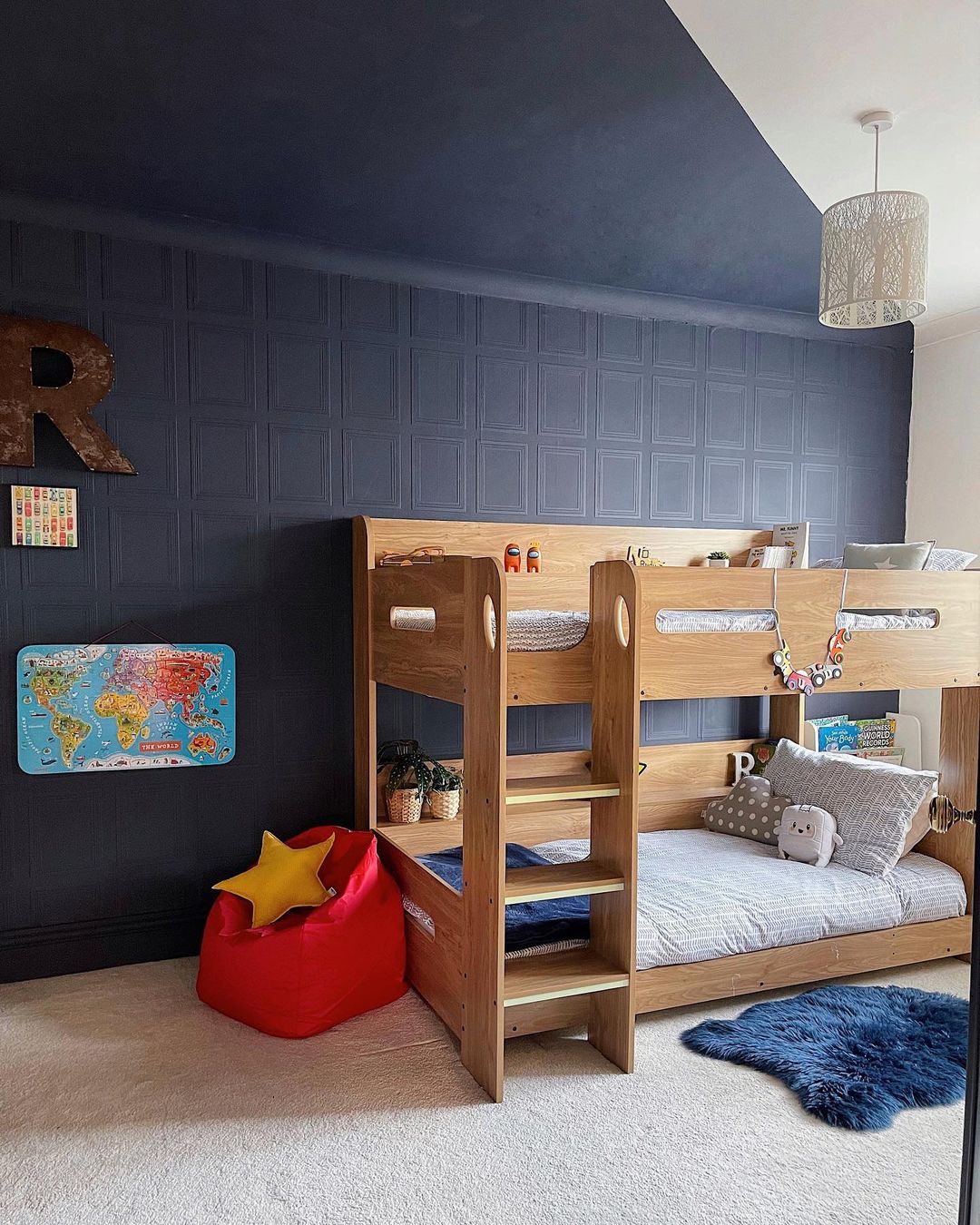
To create a bedroom which encourages sleep, choose calming paint colours for the walls. Begin by considering your child’s favourite colour. Is it blue? Then select a muted blue - a shade of blue which is toned down with grey. The addition of grey makes pure colours less intense and more appropriate for larger surfaces. The value of the blue (how light or dark) will depend on the size of the room and your child’s preference. For example a teenager may prefer a more mature shade similar to Benjamin Moore’s Kensington Blue 840 or Below Deck from COAT Paints.
If your child is sensitive to bright light, avoid choosing colours which are too pastel for a bedroom which already receives plenty of natural light. Bright pastel colours and tinted whites, when applied to all four walls of a room, will reflect all available light which can be jarring and overstimulating. Instead consider muted pastels.
If you prefer wallpaper, the best options for a calming effect in your child’s bedroom are designs with similar colours. Avoid loud high contrast colour palettes with complicated patterns which can cause eye strain. Simple patterns like stripes or single foliage motifs in a monochromatic (different shades of the same colour) scheme can be effective. Where appropriate, try to include your child in the selection process. Wallpaper is subjective like art. Your child should find it comforting and a pleasure to look at.
It is very important to get the lighting right. Warm white light at a Kelvin value of 2200K to 2700K provides soft lighting which supports relaxation. Install a dimmer switch so your child can control the light intensity. Where brighter lighting is needed for tasks such as homework, a desk lamp with a cooler bulb at a value of 3000K or more will be sufficient. The colour of general artificial lighting can alter the appearance of paint colours, so be sure to test the colour options on the walls first before committing. Your child may prefer the nighttime look of the bedroom throughout the day, so install black out blinds for both options. It might also make it easier to have afternoon naps.
Choosing the right bedding is another way to create a comforting and restful bedroom for your child. However, as the bed is the largest piece of furniture, it becomes the focal point of the space. The bedding colours should relate to the walls or vice versa, to create an aesthetic which feels harmonious. Too many conflicting elements in the room will only create a space which feels disconnected. Choose blankets and fabrics in textures that your child enjoys. You can also add oversized cushions and stuffed toys for a cocooning feeling.
Do not be afraid to invest in some artwork for your child. This could be in the form of abstract prints or more realistic impressionist paintings. A piece of artwork that your child loves offers the benefits of predictable sensory input and stress relief. Studies show that passive art observation can lower anxiety and calm the nervous system. The good thing about art is that it could be the starting point from which parent and child can choose a wall colour for the bedroom. This can be a fun bonding activity.
Be sure to also include organising units in your child’s bedroom to prevent clutter. Your child will in turn have some measure of control of the space and feel independent.
Ultimately, there is no single “best” bedroom colour scheme for every autistic child. Each child experiences their environment differently, so the most successful space will be one that reflects their individual sensory needs and personal preferences. By carefully considering colour, lighting, texture and organisation, parents can create a bedroom that feels calm, predictable and comforting. Involving your child in the process can also help them develop a sense of ownership and control over their space. The aim is not simply to create a beautiful bedroom, but a personal sanctuary where your child feels safe, comfortable and able to truly rest.